
Opinion Column, Paula del Valle
To do this, we must go back a little further, not just consider the harvest day and re-entry cycles. We must consider many associated factors that influence the post-harvest behavior of the fruit. It’s not just about harvesting, packing, using some technology, and shipping.
It’s a process that requires considering the plant’s behavior under the conditions in which it grows and develops, flowers, and produces, or not.
In recent years, we have faced increasingly greater challenges. 2023 was a prelude to what was to come: heat waves and low temperatures to the point of delaying and creating problems in production levels, not because we didn’t have all the buds, but because in some cases we have smaller fruit, a result of the climatic influence. The plant responds to that environment.
In recent years, thanks to my travels to different locations, I’ve been fortunate enough to witness the growth and development of plants and fruits, and to evaluate their post-harvest behavior, across various genetic programs. Each program has its own advantages, and we’ve worked in areas where, 20 years ago, we wouldn’t have imagined producing blueberries. I’ve begun a rather difficult or complex process, but with the collaboration of the companies I’m grateful to, and of others passionate about learning how to achieve consistent quality and post-harvest performance, it may well be a product of experience.
Each program provides a roadmap of behavior, key indicators, and so on, outlining how the plant «should produce,» how it «should behave.» But we’ve forgotten that it’s a living organism that responds to the conditions in which it develops, and if those conditions are challenging, nature responds.
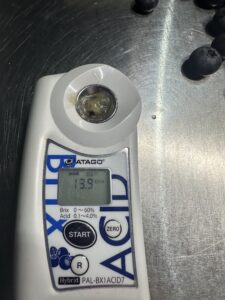
Today, we have exceptional varieties that release ethylene, have high respiration rates, and thrive at 0°C, they continue to breathe, adding brix. . Twenty years ago, we didn’t even think about it, or maybe we did, but we hadn’t factored in climate instability and expansion.
 But we don’t learn. Eighteen to twenty years ago, we were already anticipating that behaviors could change, that susceptibilities to certain diseases could appear that we hadn’t even dreamed of seeing in blueberries. That’s key; remember, we work with living things. And nature responds.
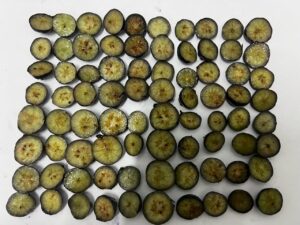
I’ve seen the heterogeneity, the complexity for growers when they receive rejection after rejection: high sugar content, heterogeneous fruit, firm, overripe, strange flavors.
This leads me to conclude that we must work on varietal characterization that goes beyond the chilling requirement, the kilos it should produce in year four, firmness, and size. As an industry, we must take responsibility for this, and it’s something I’m deeply passionate about defining and describing. Fortunately, my work takes me to different countries and production areas, which I’m grateful for. It allows me to work with almost all the available programs, and I’ve been able to review data, guide producers, and encourage them to develop their varietal characterization processes as a way to anticipate, or try to anticipate, the challenges posed by the climate. Clearly, the challenge is significant. But finding a balance to achieve consistency, without additional effort or support, is key. Technologies can help, but they don’t replace the good quality that originates in the orchard.
I believe that’s the key today to making progress, not just in terms of weight—weight with quality—but in consistent fruit throughout the year and across different regions. There are multinational companies that have worked on this, but the pressure to meet weight demands puts the varietal characterization process on hold; other priorities take precedence. I believe it is a priority, one we only remember when a challenging year like this one arrives: weeks of heat, a short season, smaller fruit size, and therefore lower volume.
This is a continuous, ongoing process, not something that happens once or twice a season, or only once and then not the next. It should be implemented, and the genetic suppliers should carry it out and collaborate on it. As an industry, we must achieve a balance, be consistent with the quality we expect to produce. In this way, the industry will preserve its distinctive character, not one year producing perfect Peruvian fish and the next with 50% dehydrated, undersized fish. Being consistent means implementing continuous improvement processes not only in documentation but also comprehensively throughout the production chain. We must remember that we work with living beings, and Mother Nature manifests herself, and often we pay the price.
I look forward to your comments……
Como definir el momento ideal de cosecha para cada variedad?, Como lograr la tan ansiada consistencia? La importancia de la caracterización varietal
Columna de Opinión, Paula del Valle
Para ello debemos ir un poco mas atrás, no solo tomar el día de cosecha, los ciclos de reingresos, debemos considerar muchos factores asociado que influencian el comportamiento en postcosecha de esa fruta. No es solo cosechar, empacar, usar alguna tecnología y enviar.
Es un proceso que requiere considerar el comportamiento de la planta en las condiciones en las cuales crece y se desarrolla, florece y produce, o no.
En los últimos años nos hemos visto enfrentados cada vez a mas desafíos, el 2023 fue un preámbulo de lo que seguiría, olas de calor, bajas temperaturas al punto de retrasar y generar problemáticas en los niveles productivos, pero no por no tener todas las yemas si no por que tenemos en algunos casos frutos mas pequeños, producto de la influencia climática. La planta responde a ese medio ambiente.
En los últimos años y dado mis viajes en diferentes locaciones, he tenido la fortuna de ver como crecen y se desarrollan las plantas y frutos y a su vez evaluar su comportamiento en postcosecha, de diferentes programas genéticos; cada uno con sus bondades, en zonas donde hace 20 años ni habríamos imaginado que produciríamos arándanos. He comenzado un proceso, mas bien difícil o complejo, pero con la colaboración de las empresas a las cuales agradezco, y de otros apasionados por saber o buscar como lograr la consistencia en calidad y postcosecha, puede ser producto de las experiencias.
 Cada programa entrega una hoja de ruta del comportamiento, indicaciones claves, etc indicando como “ debería producir” esa planta, como “debería comportarse”. Pero nos hemos olvidado que es un ser vivo que responde a las condiciones en las cuales se desarrolla y si estas son desafiantes, la naturaleza responde.
Hoy, contamos con variedades excepcionales, que liberan etileno, tienen altas tasas respiratorias y evolucionan a 0°C, siguen respirando, sumando brix. Hace 20 años ni lo pensábamos, o si, pero no contábamos con la inestabilidad climática, y la expansión.
Pero no aprendemos, hace 18-20 años ya veníamos visualizando que los comportamientos podrían variar, que podrían aparecer susceptibilidades a ciertas enfermedades que ni en sueños habíamos observado en arándanos. Esa es una clave, recordar que trabajamos con seres vivos. Y la naturaleza responde.
He visto la heterogeneidad, la complejidad de los productores cuando reciben rechazo tras otro, alta azúcar, fruta heterogénea, firme, sobremadura, sabores extraños.
Eso, me lleva a analizar que debemos trabajar necesariamente una caracterización varietal mas allá del requerimiento de frio, de los kilos que debería producir al año 4, de la firmeza, y el calibre; debemos como industria responsabilizarnos de ello y es algo me que tiene profundamente apasionada por definir y describir.
Afortunadamente mi trabajo me lleva por diferentes países y zonas productivas, agradecida de ello, permitiéndome convivir con casi todos los programas disponibles, y he podido ir revisando data, llevando a los productores e instándoles a generar sus procesos de caracterización varietal como una forma de anticiparse, o tratar de anticiparse; con el clima, esta claro que el desafío no es menor. Pero buscar un equilibrio para lograr la consistencia, no exento de esfuerzo y apoyo adicionales, tecnologías que colaboran, pero no reemplazan una buena calidad, que nace en el huerto.
Creo que allí esta la clave hoy para lograr avanzar, no solo en kilos, kilos con calidad sino, en fruta consistente durante todo el año y saltando de una región a otra, hay compañías multinacionales que lo han trabajado pero llega la presión de los kilos y el proceso de caracterización varietal queda en espera, hay otras prioridades; yo creo que si es una prioridad, de la que nos acordamos cuando viene un años complejo como este, semanas de calor, temporada corta, menos calibre por lo tanto menor volumen.
Este es un proceso continuo, continuo permanente, no de una o dos veces en una temporada o de una temporada y otra no. Debería implementarse y los proveedores de la genética deberían llevarlos a cabo y colaborar en ello. Debemos como industria lograr un equilibrio, ser consistentes como la calidad que esperamos producir. De esa forma, la industria lograra preservar el sello que la distingue, no un año Perú perfecto y al siguiente con 50% de deshidratado, bajo tamaño. Ser consistentes implica llevar procesos de mejora continua no solo en lo documental, si no de forma integral en la cadena productiva. Debemos recordar que trabajamos con seres vivos y la madre naturaleza se manifiesta, y muchas de esas veces nos pasa la cuenta.
Quedo atenta a sus comentarios …..