
Las primeras llegadas de arándanos peruanos a Europa desde la semana 27-28 fueron excelentes, prometedoras; pero desde las semanas 37 y 38 vuelven a poner sobre la mesa una pregunta que la industria debe hacerse cada temporada: ¿estamos evaluando realmente la condición de la fruta o seguimos mirando indicadores aislados?
En estas primeras semanas hemos encontrado fruta con una característica que, a primera vista, parece muy positiva: alta firmeza y valores de sólidos solubles alrededor de 11,5–12,3 °Brix.
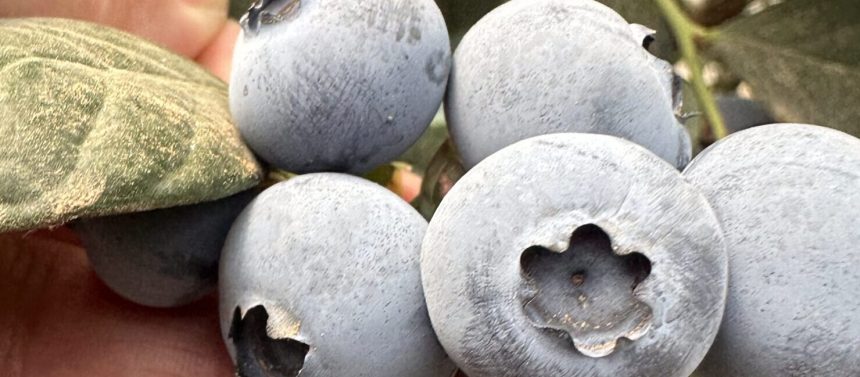
Sin embargo, junto con esta fruta aparecen otros fenómenos que requieren atención: pérdida de bloom, heterogeneidad de calibre y diferencias importantes entre lotes y variedades.
Y aquí aparece uno de los elementos que no podemos dejar fuera de la conversación: el impacto de las condiciones climáticas asociadas a El Niño sobre el desarrollo y la condición de la fruta.
El calibre está mostrando una señal que no podemos ignorar
Una de las evidencias más claras que estamos observando en estas primeras llegadas es la variabilidad del calibre.
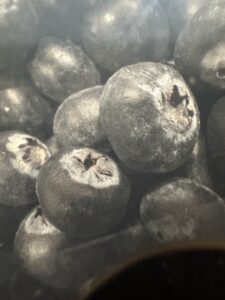
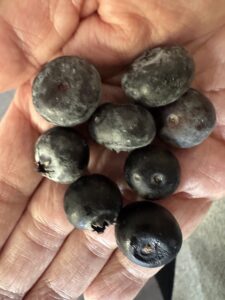
Hemos encontrado clamshells con fruta entre 12 y 18 mm, incluso en variedades que tradicionalmente se caracterizan por trabajar en calibres de 22-24 mm o superiores.
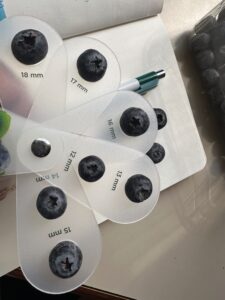
Esto no significa que cada fruta pequeña pueda atribuirse exclusivamente a El Niño. El calibre es el resultado de múltiples variables: genética, carga frutal, desarrollo fenológico, disponibilidad hídrica, nutrición, temperatura, manejo del cultivo y momento de cosecha.
Pero el comportamiento observado sí es consistente con un escenario climático que está generando mayor presión sobre el desarrollo del cultivo y una mayor variabilidad fisiológica.
La situación de Perú durante esta campaña no puede analizarse separadamente del contexto climático. La IBO revisó recientemente a la baja su proyección de exportaciones de Perú para la campaña 2026, situándola en aproximadamente 382.000 toneladas, y ha señalado el efecto de El Niño sobre el desarrollo de la temporada.
Además, distintos análisis de la campaña han señalado que las temperaturas elevadas pueden modificar procesos fisiológicos relacionados con crecimiento, floración, desarrollo del fruto, sólidos solubles y comportamiento postcosecha.
Por eso, el calibre no debería ser solamente un dato comercial al momento de recibir la fruta: puede convertirse en una señal temprana del comportamiento fisiológico que tuvo el cultivo.
La firmeza es alta. Pero ¿es suficiente?
En estas primeras llegadas encontramos fruta muy firme. Y eso es una buena noticia.
La evolución genética de los arándanos está entregando materiales con mayores niveles de firmeza, mejor calibre potencial y una capacidad postcosecha que hace algunos años era mucho más difícil de conseguir.
Pero precisamente por eso debemos comenzar a cambiar la pregunta.
Ya no basta con preguntar:
¿Cuánto marcó de firmeza?
Tenemos que preguntar:
¿Cómo llegó la fruta y qué capacidad tiene de mantenerse así?
Porque una fruta puede presentar una excelente firmeza instrumental y, al mismo tiempo, mostrar pérdida de bloom, heterogeneidad de calibre, diferencias en pulpa, menor expresión de sabor o una respuesta distinta después de varios días de almacenamiento.
La firmeza sigue siendo un KPI fundamental.
Pero ya no puede funcionar de manera aislada.
El bloom también está entregando información
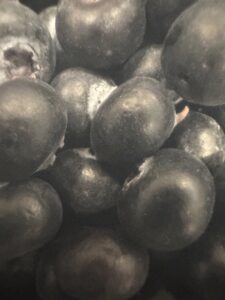
La pérdida de bloom observada en algunas de estas primeras llegadas merece una lectura más amplia.
No necesariamente significa que exista un único responsable. El bloom puede verse afectado por la condición de la fruta, manipulación, cosecha, embalaje, fricción, condensación, condiciones de almacenamiento y transporte, entre otras variables.
Por eso, más que buscar inmediatamente un culpable, debemos reconstruir el proceso.
¿Cómo se cosechó?
¿A qué temperatura llegó la fruta al packing?
¿Cuánto tiempo permaneció antes del enfriamiento?
¿Cómo fue el proceso de prefrío?
¿Hubo fluctuaciones térmicas?
¿Existieron puntos de condensación?
¿Cómo se manipuló durante el embalaje?
¿Qué condiciones tuvo durante el transporte?
La tecnología y los tratamientos postcosecha forman parte de esta ecuación y pueden ser herramientas muy valiosas para proteger la condición de la fruta.
La clave está en integrarlos dentro de un sistema de decisión basado en datos, donde podamos entender qué funciona, para qué variedad, bajo qué condición inicial, durante cuánto tiempo y en qué mercado de destino.
No se trata de estar a favor o en contra de una tecnología.
Se trata de saber cuándo, cómo y bajo qué condiciones utilizarla para obtener el resultado esperado.
De la fruta firme a la fruta consistente
El gran desafío de esta campaña no será solamente producir fruta firme.
Será producir y entregar fruta consistente.
Consistente en calibre.
Consistente en sabor.
Consistente en textura.
Consistente en bloom.
Consistente en condición interna.
Y, sobre todo, consistente después de 30, 40 o 45 días, dependiendo del mercado.
El escenario climático actual hace todavía más importante conectar la información del campo con la postcosecha.
Fenología → suma térmica → desarrollo de fruto → calibre → °Brix → condición de pulpa → firmeza → enfriamiento → almacenamiento → transporte → arribo.
Cuando conectamos estas variables dejamos de analizar solamente lo que ocurrió y comenzamos a entender por qué ocurrió.
¿Cómo podemos mejorar nuestros arribos?
La respuesta no está en un único punto de la cadena.
Está en integrar mejor la información.
- Medir el impacto climático desde el campo
No esperar al packing para descubrir que existe heterogeneidad.
Seguimiento fenológico, suma térmica, desarrollo de calibre, peso de fruto, °Brix y condición de pulpa deben comenzar antes de la cosecha.
- Cambiar la mirada sobre el calibre
Un clamshell con fruta de 12–18 mm en una variedad cuyo comportamiento histórico está por encima de esos valores debe generar una alerta.
No necesariamente una alarma comercial, sino una pregunta técnica:
¿Qué ocurrió durante el desarrollo de este fruto?
- Evaluar madurez más allá de la firmeza
Firmeza + °Brix + color + calibre + pulpa + condición externa + bloom.
La combinación de indicadores entrega una fotografía mucho más real del potencial postcosecha.
- Controlar rigurosamente la cadena de frío
Temperatura de cosecha, tiempo hasta prefrío, temperatura de pulpa, velocidad de enfriamiento, almacenamiento, fluctuaciones térmicas, transporte y eventuales puntos de condensación.
La cadena de frío no comienza cuando el pallet entra a la cámara.
Comienza en la cosecha.
- Evaluar las tecnologías dentro de un sistema
Tratamientos, atmósferas, materiales de embalaje, tecnologías de protección y otras herramientas postcosecha deben evaluarse considerando la condición inicial de la fruta.
Una tecnología puede entregar resultados muy diferentes dependiendo de la variedad, madurez, temperatura, condición fisiológica y duración del tránsito.
Por eso, el objetivo no debe ser simplemente validar una tecnología.
Debe ser determinar bajo qué condiciones esa tecnología genera valor real para la fruta y para el mercado de destino.
El verdadero desafío: predecir el arribo
La industria de los arándanos está avanzando rápidamente.
Las nuevas genéticas están modificando lo que entendíamos tradicionalmente como fruta de alta calidad. Hoy podemos encontrar materiales extremadamente firmes y con muy buen comportamiento de calibre.
Por eso necesitamos evolucionar también en la forma de medir.
El futuro no está solamente en decir:
“Esta fruta llegó con 85 Shore.”
El verdadero valor está en poder decir:
“Con esta condición de cosecha, este nivel de madurez, este calibre, este °Brix, esta condición de pulpa y esta estrategia de frío, esperamos este comportamiento después de 30 o 45 días.”
Ese es el salto que necesita la postcosecha.
Del volumen a la condición.
De la firmeza a la consistencia.
Del dato aislado a la predicción de vida de anaquel.
Y quizás ahí está una de las principales oportunidades que nos deja esta campaña peruana: no solamente aprender cómo llegó la fruta, sino utilizar cada arribo para entender mejor cómo producir, cosechar, enfriar y transportar la fruta que queremos recibir mañana.
From sizing to arrival: understanding the climate impact on blueberry quality
The initial shipments of Peruvian blueberries to Europe—starting around weeks 27 and 28—were excellent and promising; however, by weeks 37 and 38, a question the industry must ask itself every season resurfaced: are we truly evaluating fruit condition, or are we still looking at isolated indicators?
During these early weeks, we have encountered fruit with a characteristic that, at first glance, appears very positive: high firmness and soluble solids levels ranging from 11.5 to 12.3 °Brix.
However, alongside these traits, other phenomena requiring attention have emerged: loss of bloom, inconsistent sizing, and significant differences between batches and varieties.
This brings us to a crucial element that cannot be left out of the conversation: the impact of weather conditions associated with El Niño on fruit development and condition.
Fruit size is showing a signal we cannot ignore.
One of the clearest signs observed in these early shipments is the variability in fruit size.
We have found clamshells containing fruit ranging from 12 to 18 mm—even among varieties traditionally characterized by sizes of 22–24 mm or larger.
This does not mean that every instance of small fruit can be attributed solely to El Niño. Fruit size is the result of multiple variables: genetics, crop load, phenological development, water availability, nutrition, temperature, crop management, and harvest timing.
However, the observed behavior is consistent with a climatic scenario that is placing greater stress on crop development and leading to increased physiological variability.
The situation in Peru during this season cannot be analyzed in isolation from the climatic context. The IBO recently revised its export forecast for Peru for the 2026 season downward—setting it at approximately 382,000 tonnes—and highlighted the impact of El Niño on the season’s progression. Furthermore, various analyses of the season have indicated that high temperatures can alter physiological processes related to growth, flowering, fruit development, soluble solids, and post-harvest behavior.
Therefore, fruit size should not be viewed merely as a commercial metric upon receipt; it can serve as an early indicator of the crop’s physiological performance.
Firmness is high. But is that enough?
In these initial shipments, we are finding very firm fruit. And that is good news.
Genetic advancements in blueberries are yielding varieties with greater firmness, better potential size, and a post-harvest shelf life that was much harder to achieve just a few years ago.
But precisely for this reason, we need to change the question we ask.
It is no longer enough to ask:
What was the firmness reading?
We must ask:
What condition was the fruit in upon arrival, and how well can it maintain that state?
After all, fruit can exhibit excellent instrumental firmness while simultaneously showing a loss of bloom, uneven sizing, pulp inconsistencies, reduced flavor, or a different response after several days of storage.
Firmness remains a fundamental KPI.
But it can no longer be considered in isolation.
The bloom also provides valuable information.
The loss of bloom observed in some of these early shipments warrants a broader analysis.
It does not necessarily imply a single cause. Bloom can be affected by fruit condition, handling, harvesting, packing, friction, condensation, and storage or transport conditions, among other variables.
Therefore, rather than immediately looking for someone to blame, we need to reconstruct the process.
How was it harvested?
At what temperature did the fruit arrive at the packing house?
How long did it sit before cooling?
What was the pre-cooling process like?
Were there temperature fluctuations?
Did condensation occur?
How was it handled during packing?
What were the conditions during transport?
Technology and post-harvest treatments are part of this equation and can be invaluable tools for protecting fruit quality. The key lies in integrating them into a data-driven decision-making system, where we can understand what works—for which variety, under what initial conditions, for how long, and for which target market.
It is not a matter of being for or against a technology.
It is about knowing when, how, and under what conditions to use it to achieve the expected result.
From firm fruit to consistent fruit
The major challenge of this season will not simply be producing firm fruit.
It will be producing and delivering consistent fruit.
Consistent in size.
Consistent in flavor.
Consistent in texture.
Consistent in bloom.
Consistent in internal condition.
And, above all, consistent after 30, 40, or 45 days, depending…
…of the market.
The current climate scenario makes connecting field data with postharvest data even more critical.
Phenology → heat units → fruit development → size → °Brix → pulp condition → firmness → cooling → storage → transport → arrival.
When we connect these variables, we move beyond merely analyzing what happened and begin to understand *why* it happened.
How can we improve our arrival quality?
The answer does not lie in a single point of the supply chain.
It lies in better data integration.
Measuring climate impact starting in the field
Do not wait until the packing stage to discover heterogeneity.
Monitoring phenology, heat units, size development, fruit weight, °Brix, and pulp condition must begin before harvest.
Changing the perspective on fruit size
A clamshell containing 12–18 mm fruit—for a variety that historically performs above those values—should trigger an alert.
Not necessarily a commercial alarm, but a technical question:
What happened during this fruit’s development?
Evaluating maturity beyond firmness
Firmness + °Brix + color + size + pulp + external condition + bloom.
Combining these indicators provides a much more accurate picture of postharvest potential.
Strictly controlling the cold chain
Harvest temperature, time to pre-cooling, pulp temperature, cooling rate, storage, temperature fluctuations, transport, and potential condensation points.
The cold chain does not begin when the pallet enters the cold room.
It begins at harvest.
Evaluating technologies within a system
Treatments, atmospheres, packaging materials, protective technologies, and other postharvest tools must be evaluated with the fruit’s initial condition in mind.
A single technology can yield vastly different results depending on variety, maturity, temperature, physiological condition, and transit duration.
Therefore, the goal should not simply be to validate a technology.
It should be to determine under what conditions that technology creates real value for the fruit and the destination market. The real challenge: predicting arrival quality
The blueberry industry is advancing rapidly.
New genetics are redefining what we traditionally understood as high-quality fruit. Today, we can find varieties that are extremely firm and exhibit excellent sizing characteristics.
That is why our measurement methods need to evolve as well.
The future isn’t just about saying:
“This fruit arrived with a firmness of 85 Shore.”
The real value lies in being able to say:
“Given these harvest conditions, this maturity level, this size, this Brix level, this pulp condition, and this cold-chain strategy, we anticipate this specific performance after 30 or 45 days.”
That is the leap the post-harvest sector needs to make.
From volume to condition.
From firmness to consistency.
From isolated data points to shelf-life prediction.
And perhaps therein lies one of the key opportunities offered by this Peruvian season: not merely learning how the fruit arrived, but using every shipment to better understand how to produce, harvest, cool, and transport the fruit we want to receive tomorrow.