
The 14th National Meeting of Blueberry Producers in Portugal once again confirmed its status as one of the most established and respected gatherings in the European blueberry sector. Organized by the Portuguese Association of Blueberry Producers (ANPM), the event brought together growers, researchers, technology providers, consultants and commercial partners from across Portugal and other European countries for two days of knowledge exchange, technical discussions and networking.
With fourteen editions behind it, the meeting has become one of the longest-running industry forums dedicated to blueberries in Europe, reflecting the steady development of the sector and its increasing importance within the continent’s fruit production landscape. Over the years, the event has evolved into a central platform for debate and collaboration, supporting the professionalization of the Portuguese blueberry industry and strengthening its connections with the broader European market.
A unique venue and strong attendance
This year’s edition took place in Santarém, at the historic Convento de São Francisco, a remarkable venue that added a special atmosphere to the meeting. The choice of location reinforced the character of the event, blending centuries-old architecture with the modern and forward-looking spirit of the blueberry sector. The impressive setting provided an inspiring environment for dialogue and learning, contributing to a strong sense of community among participants.
The event drew a large audience from across the blueberry value chain. Producers, agronomists, researchers, input suppliers, technology companies and commercial representatives gathered in Santarém, demonstrating the growing relevance of the meeting as a key reference point for the sector in Portugal and the Iberian Peninsula. The diversity of participants also highlighted the increasing integration of the Portuguese industry into the international blueberry network.
A comprehensive technical program
The first day of the meeting was dedicated to presentations and technical sessions addressing the most important trends shaping the industry. Speakers analyzed the evolution of the European blueberry market, consumption trends in Portugal, and the dynamics of the Iberian market. These discussions provided valuable insights for producers seeking to position themselves competitively in an expanding and increasingly demanding market.
Several sessions focused on farm management and production strategies. Experts discussed topics such as pre- and post-harvest fruit quality, efficient farm operation, and the impact of European agricultural policies on investment and modernization in the sector. These presentations emphasized the need for professional management practices and strategic planning in order to maintain profitability and competitiveness.





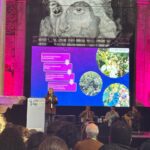




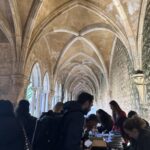
Research and innovation also played a central role in the program. Researchers presented new approaches for improving fruit quality, detecting plant stress through advanced technologies and applying bio-stimulation strategies in blueberry production. Another key theme was the integration of digital tools and artificial intelligence in agriculture, including technologies designed to detect pests and diseases or optimize harvesting operations.
One of the highlights of the day was the producers’ roundtable discussion, where leading growers shared their perspectives on the present and future of blueberry cultivation in Portugal. The discussion addressed marketing strategies for Portuguese fruit, the importance of technical expertise on farms, and the opportunities for further development of the sector.
Field day demonstrations: technology in action
The second day moved from conference halls to the field, providing participants with a hands-on experience at commercial blueberry farms near Almeirim. The field day allowed attendees to see practical applications of modern technologies and production systems in real farming conditions.
Demonstrations included mechanical harvesting equipment, monitoring systems for semi-hydroponic cultivation, soil moisture sensors, irrigation controllers and GPS-based machinery management tools. These practical demonstrations were especially valuable for producers, as they offered the opportunity to evaluate innovations directly in the field and understand how they could improve efficiency, sustainability and productivity in their own operations.

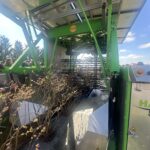
Additional technical sessions covered topics such as regenerative agriculture practices in blueberry production, post-harvest handling technologies, and artificial intelligence-based sorting and grading systems. By combining theory with real-world demonstrations, the field day reinforced the practical orientation of the meeting and its commitment to supporting innovation in the sector.
A key event for the Portuguese blueberry industry
The significance of the National Blueberry Growers Meeting goes beyond its technical content. The event has become a crucial meeting point for the entire Portuguese blueberry value chain, promoting collaboration and the exchange of experiences among growers and industry stakeholders.
Portugal’s blueberry industry has experienced remarkable growth over the past decade, driven by favorable agro-climatic conditions, improved varieties and increasing international demand for healthy fruits. In this context, events such as the National Meeting play a vital role in supporting the sector’s development by facilitating access to knowledge, technology and market insights.
As the sector continues to expand and integrate into global markets, the importance of platforms that bring together producers, researchers and industry partners becomes even more evident. The 14th edition of the National Meeting reaffirmed its position as a cornerstone event for the Portuguese blueberry industry—one that not only reflects the sector’s achievements but also helps shape its future.