
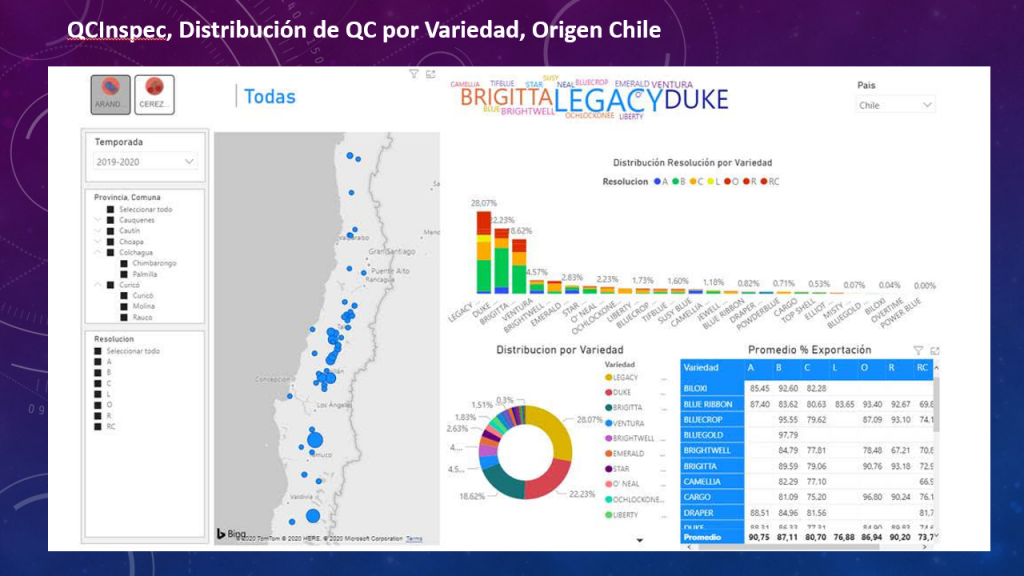
Excelente presentación de QCInspec, en nuestro primer webinar, mostrándonos la calidad, por variedad y zona dentro de Chile y Perú. En lo sucesivo continuaremos compartiendo a través de la web información tan relevante de nuestros colaboradores.
Relación entre los envases y la Calidad

Excelente presentación de Smartpac en nuestro primer Webinar : “Relación entre los envases y la Calidad”, muy interesante información de cómo podemos apoyar nuestra fruta para una mejor postcosecha.
Arándano: En el laboratorio, el contendor y los mercados
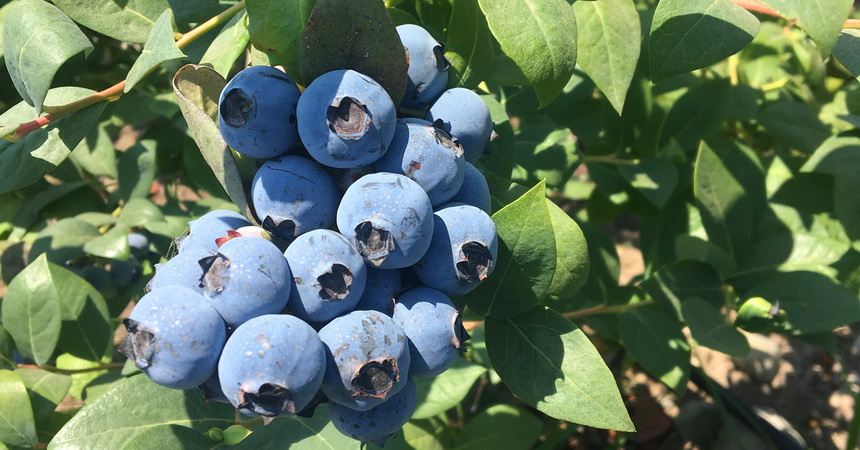
Hemos sido invitados a participar de la Jornada : «Arándano: En el laboratorio, el contendor y los mercados» Organizada por El Comité de Arándanos de Chile – Asoex y MCI/StarCool Ca+, el próximo 04 de Noviembre. Información e inscripciones haciendo click aquí
Tree-Ripen Papayas, 30 días de almacenaje

Click aqui para ver documento
Primer Webinar MyBlueProject – Partiendo la temporada ¿Como esperamos mejorar la calidad?

La primera EBTU nacida en la Universidad de Concepción licencia bioestimulante para cultivos agrícolas
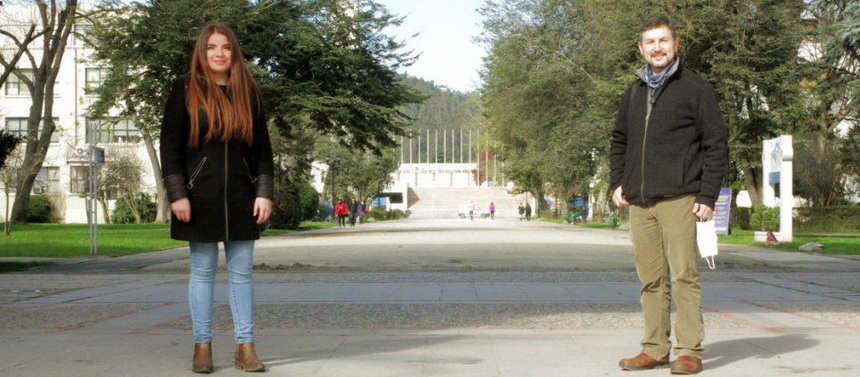
En enero de 2019 entró en vigencia una nueva normativa, con el propósito de estimular en la comunidad universitaria las actividades de transferencia de conocimiento. El reglamento busca fomentar la creación de Empresas de Base Tecnológica Universitaria (EBTU), considerando como tales a empresas en donde participa al menos un trabajador con contrato indefinido con la Universidad, en la que se utiliza, por vía del licenciamiento, tecnología generada en la UdeC, y que tienen la finalidad de explotar comercialmente dichas tecnologías en el mercado.
Uso del Anhídrido Sulfuroso SO2, en la Postcosecha del Arándano
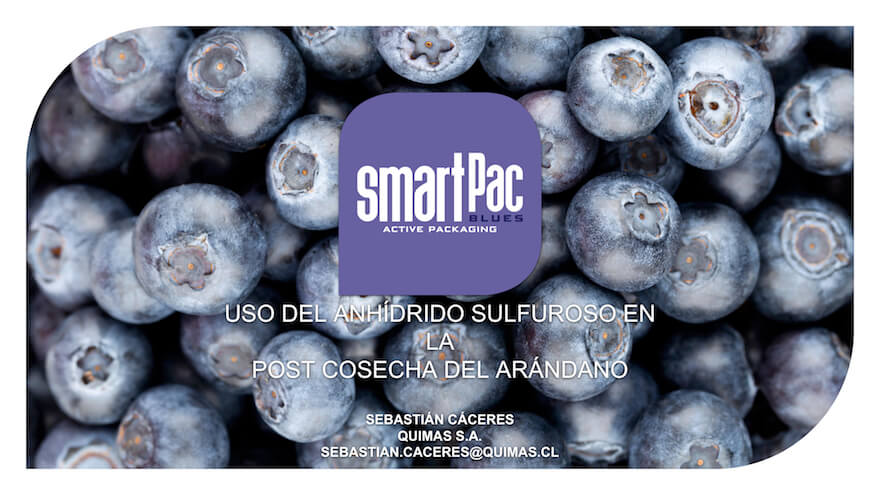
Cómo funciona el So2 para mejorar la calidad y condición en la Postcosecha de los arándanos, y su forma correcta de uso.
Avalara co-founders invest in $2M round for RipeLocker, a startup that aims to keep fruit fresh longer
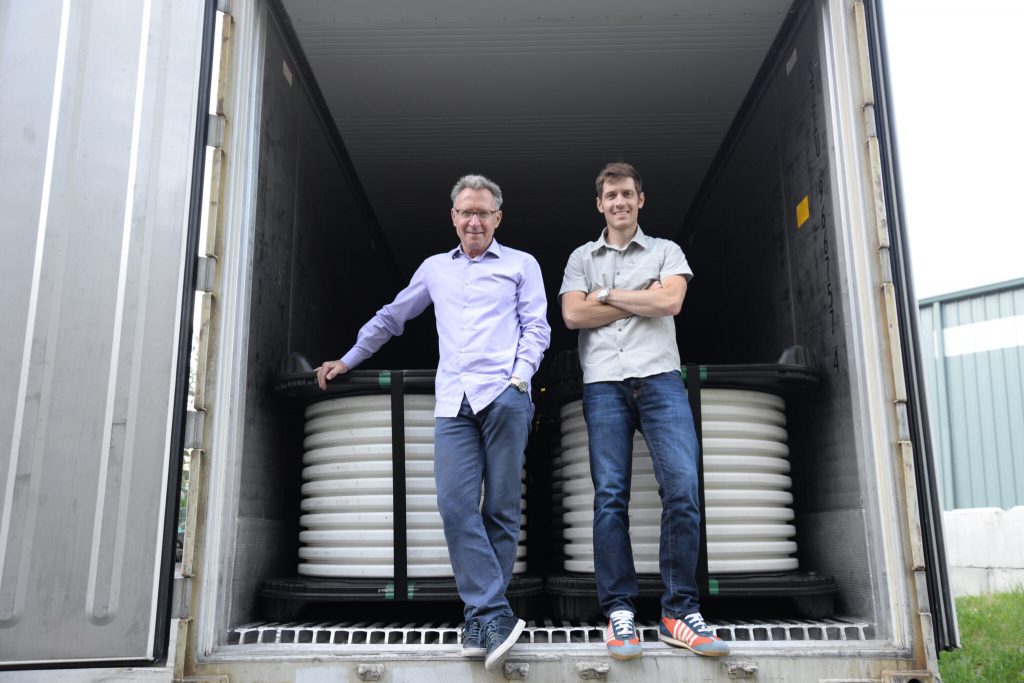
A longtime vet of the food industry, he’s seen first-hand how confounding blueberries, raspberries, and cherries can be. Despite year-round demand for berries, their brief window of seasonality and short shelf-life make the economics difficult for growers and processors.
Fungicide Resistance Profiling in Botrytis cinerea Populations from Blueberry in California and Washington and Their Impact on Control of Gray Mold
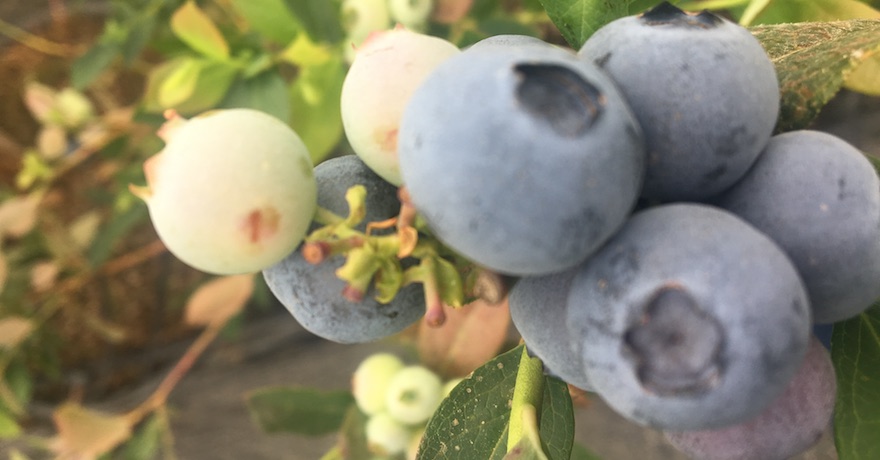
Gray mold caused by Botrytis cinerea is a major postharvest disease of blueberry grown in the Central Valley of California and western Wash- ington State. Sensitivities to boscalid, cyprodinil, fenhexamid, fludioxo- nil, and pyraclostrobin, representing five different fungicide classes, were examined for 249 (California) and 106 (Washington) B. cinerea isolates recovered from decayed blueberry fruit or flowers. In California and Washington, 7 and 17 fungicide-resistant phenotypes, respectively, were detected: 66 and 49% of the isolates were resistant to boscalid, 20 and 29% were moderately resistant to cyprodinil, 29 and 29% were resistant to fenhexamid, and 66 and 55% were resistant to pyraclostrobin. All iso- lates from California were sensitive to fludioxonil, whereas 70% of the isolates from Washington showed reduced sensitivity to fludioxonil. In California, 26 and 30% of the isolates were resistant to two and three clas- ses of fungicides, respectively. In Washington, 31, 14, 16, and 9% of the isolates were resistant to two, three, four, and five classes of fungicides, respectively. Inherent risk of the development of resistance to quinone outside inhibitor (QoI) fungicides was assessed by detecting the pres- ence of the Bcbi-143/144 intron in gene cytb. The intron was detected in 11.8 and 40% of the isolates in California and Washington, respec- tively, suggesting that the risk of QoI resistance is higher in California than in Washington. On detached blueberry fruit inoculated with 11 isolates exhibiting different fungicide-resistant phenotypes, most fun- gicides failed to control gray mold on fruit inoculated with the respec- tive resistant phenotypes but the mixture of cyprodinil and fludioxonil was effective against all fungicide-resistant phenotypes tested. Our findings would be useful in designing and implementing fungicide resistance management spray programs for control of gray mold in blueberry.
Characterization of Diaporthe australafricana and Diaporthe spp. Associated with Stem Canker of Blueberry in Chile
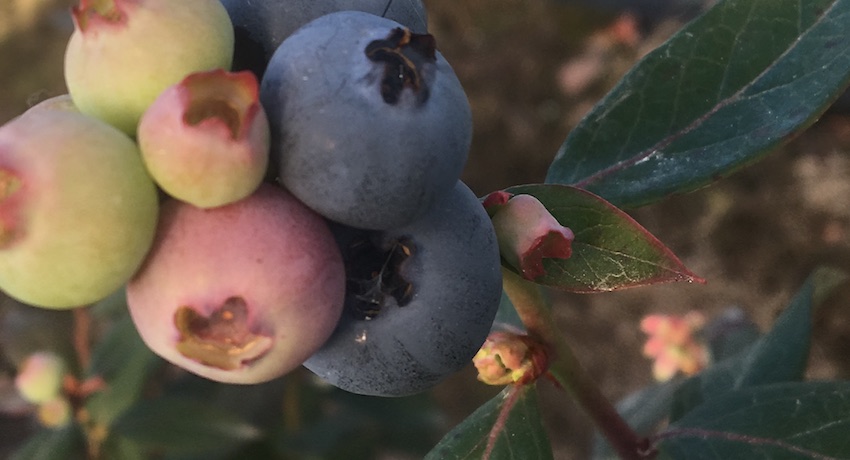
Stem canker and dieback are important factors that limit the longevity and reduce the yield of blueberry (Vaccinium spp.) in Chile. In this study, species of Diaporthe associated with blueberry were isolated and identified. The internal transcribed spacer (ITS) regions of ribosomal DNA of 30 isolates and the translation elongation factor 1-α (EF1-α) of 14 isolates were sequenced, analyzed, and compared with their morphological and pathological characteristics. The molecular analysis of ITS sequences by alignment with those of ex-type strains deposited in GenBank and morphological characteristics allowed the identification of Diaporthe ambigua, D. australafricana, D. neo- theicola, D. passiflorae, and Diaporthe sp. 1. However, morphology alone was insufficient to identify these species. The combined analysis of ITS and EF1-α gene sequences grouped the Chilean blueberry isolates in the same five groups obtained in the ITS analysis. Pathogenicity tests conducted with attached and detached blueberry shoots (<1 year old) and stems (1 to 2 years old) confirmed that isolates of these Diaporthe spp. were pathogenic. The symptoms were repro- ducible and consisted of necrotic reddish-brown cankers on blueberry shoots and stems. These isolates were capable of infecting blueberry fruit, causing a soft decay, suggesting that they were tissue nonspecific and were also pathogenic on shoots of apple, grapevine, and pear. D. australafricana was the most frequently isolated species and D. am- bigua, D. australafricana, and D. passiflorae were highly virulent in shoots, stems, and fruit of blueberry. This study showed that at least four species of Diaporthe are primary pathogens, capable of causing stem canker symptoms on blueberry, and this is the first report of D. ambigua, D. neotheicola, and D. passiflorae attacking this host.